Opus 4
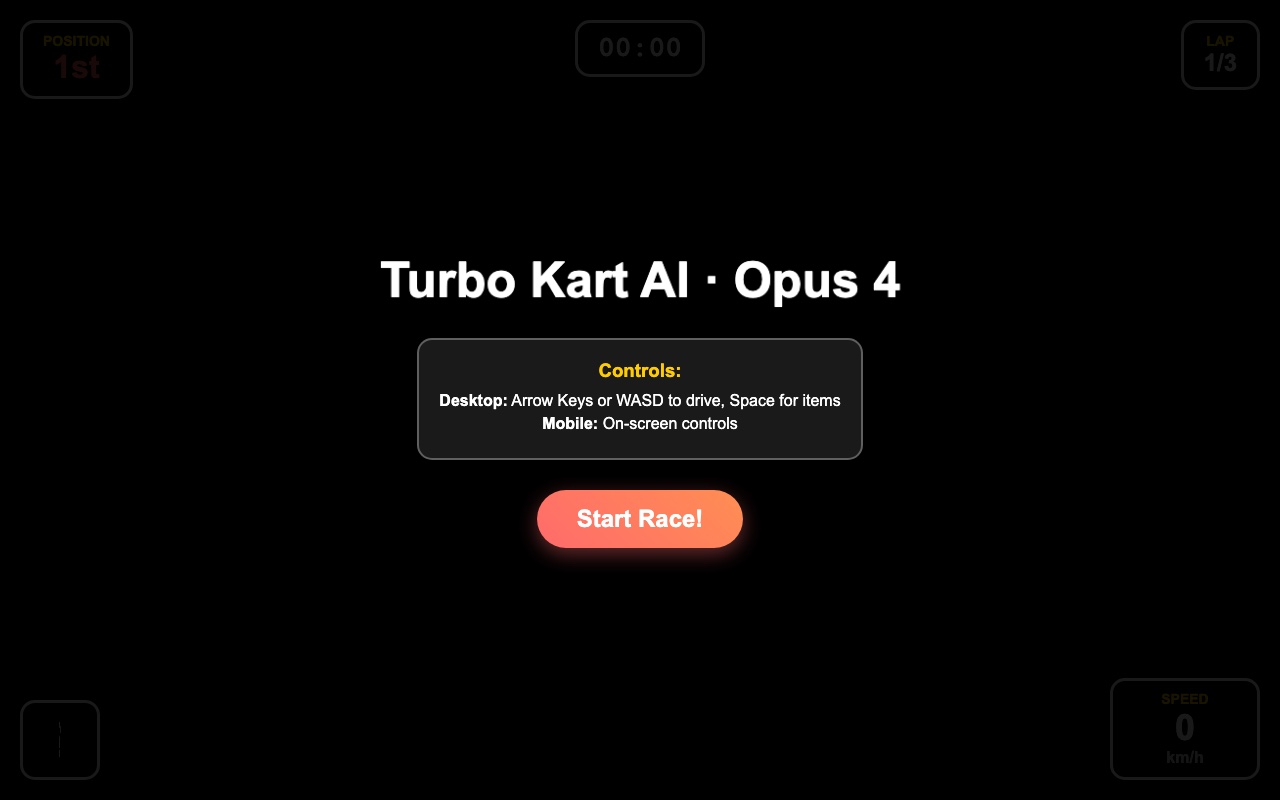
One 974-line file, a flat oval, three AI karts and a title card. It runs, and that was the bar.
Opus 4 was announced on 22 May 2025, the same day this was built.
Benchmarks are abstract. A game you can actually drive is not. Every few months I handed the best AI model available the same throwaway one-line brief and shipped whatever came back, untouched. Here are all six, in order, running in your browser. Two bonus rounds from September 2026 sit at the end. They got a longer brief, so treat them as extra credit.
On a phone? Turn it sideways. The games play best that way.
"Build a Mario Kart clone."
Same ask each round. No design doc, no asset library, no starter repo, no follow-up questions. The only variable that changed was the model on the other end.
You do not need to know anything about game development to see it. Drive each one for thirty seconds and the jump is obvious.
A flat oval and a start button. Getting anything on screen at all was the whole achievement.
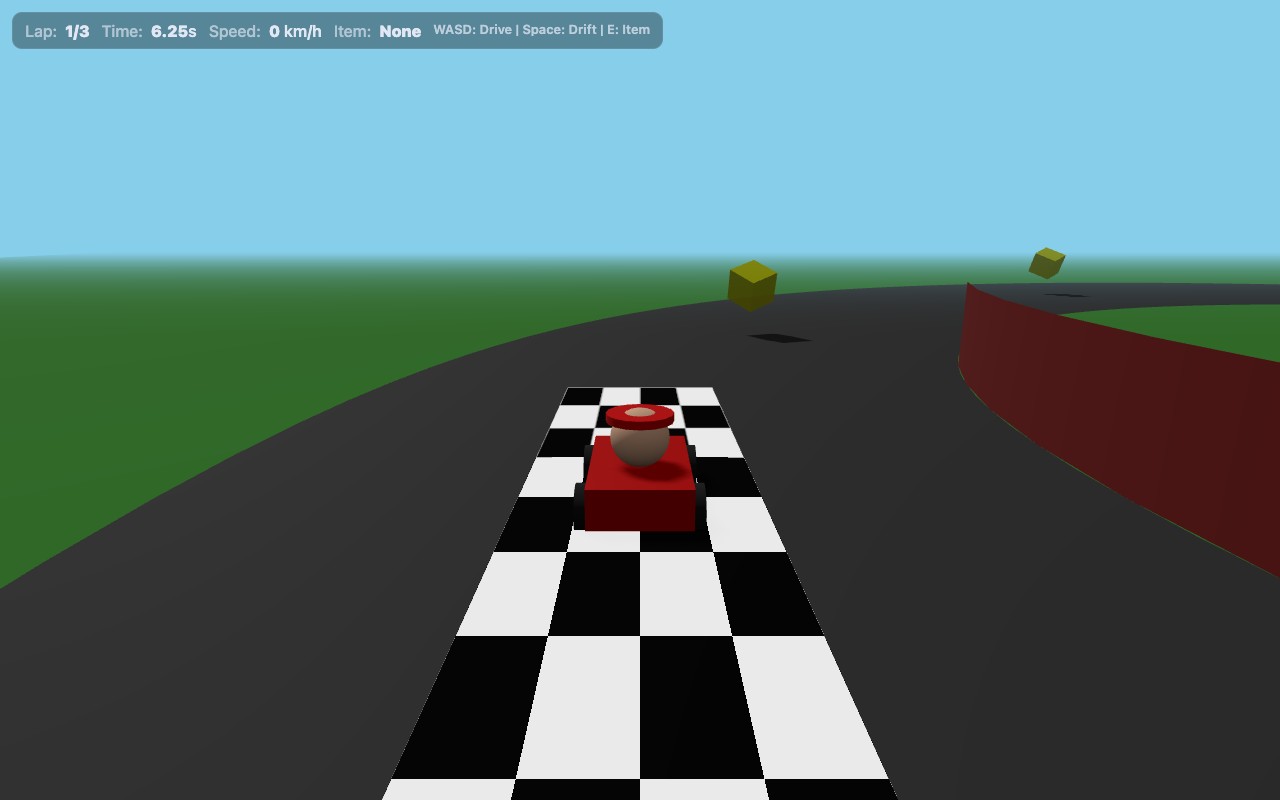
Physics engines appear. Still no opponents, no menu, and no reason to play it twice.
Art direction, multiple circuits, audio, a real race flow. It starts to feel like a product.
Grip-limited physics, AI that holds a racing line, a points championship. It plays like a game.
Each card names the model that wrote it. Hit play and it opens right here, no download and no sign-up. Two bonus rounds follow at the end.
One 974-line file, a flat oval, three AI karts and a title card. It runs, and that was the bar.
Opus 4 was announced on 22 May 2025, the same day this was built.
First attempt at a real physics engine. Split into modules, but the world is still a grey ribbon on green.
GPT-5.1 shipped 12 Nov 2025, with further variants on 19 Nov.
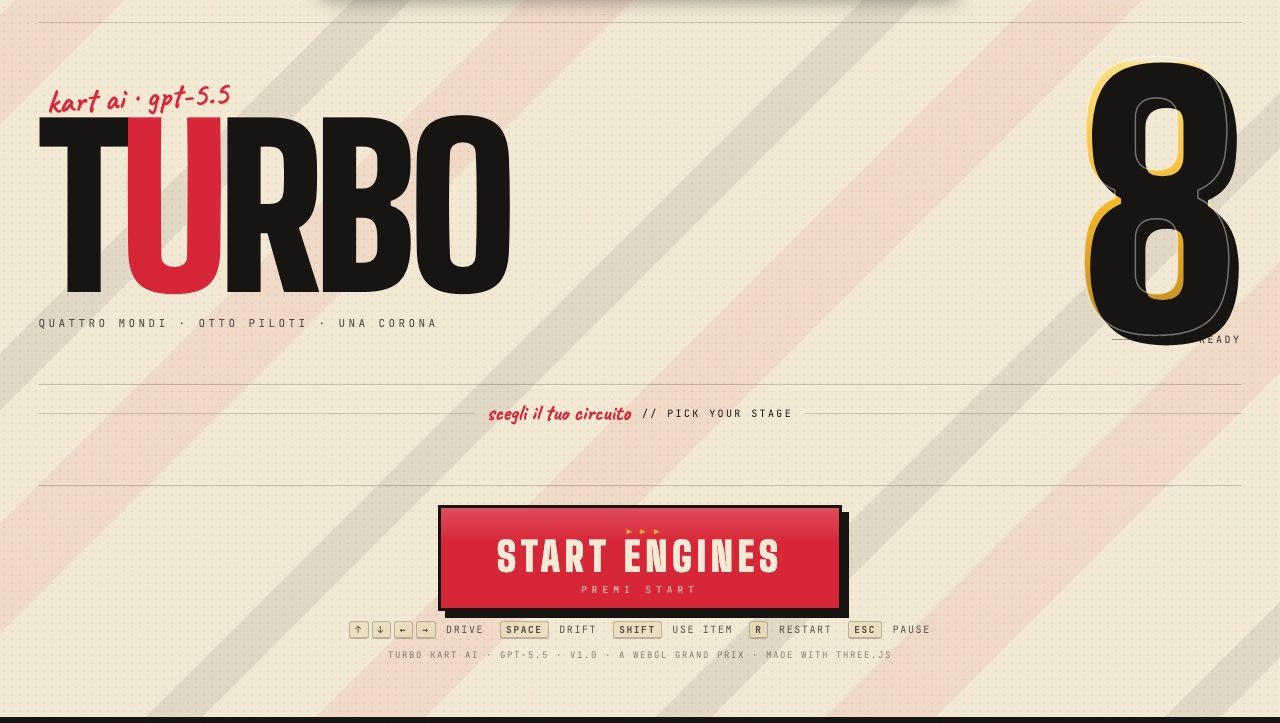
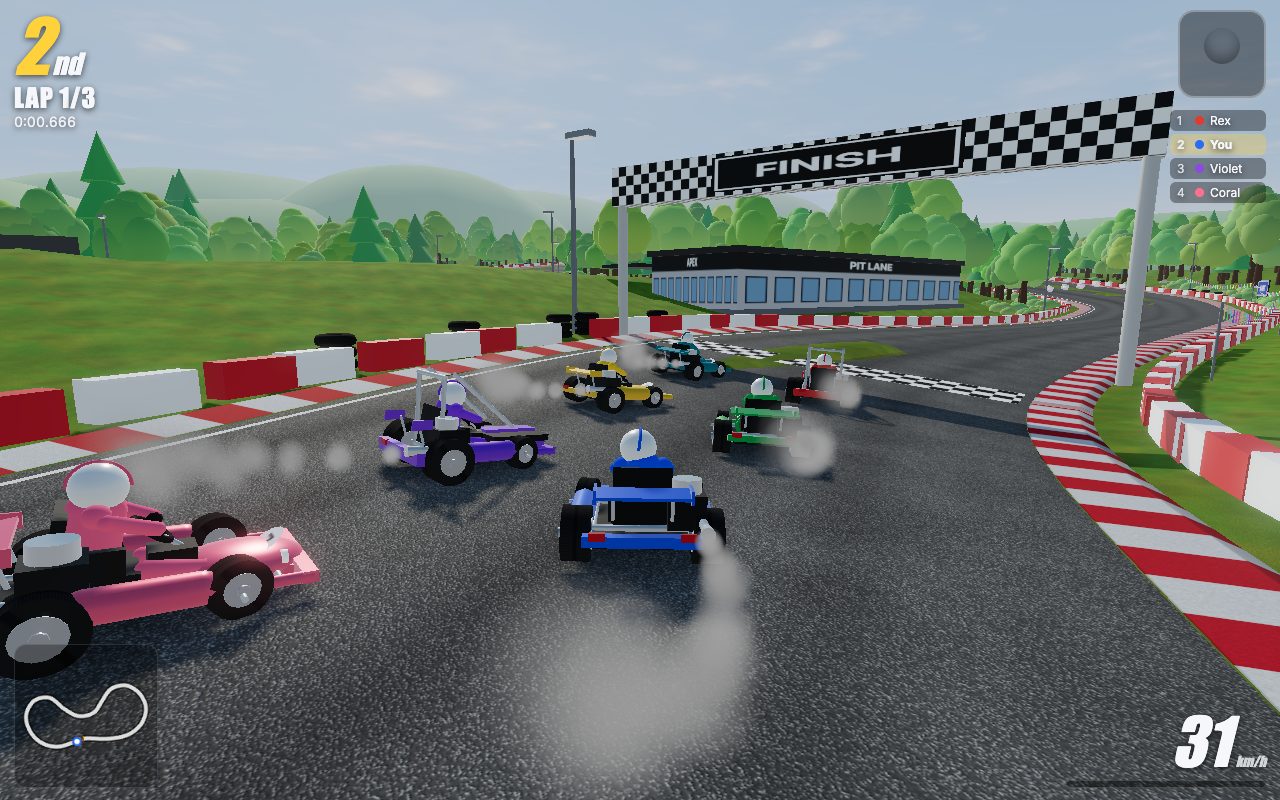
The first one with real art direction. Four themed circuits, a designed menu, synthesized audio and a proper race flow.
GPT-5.5 shipped 23 Apr 2026, three days before this was built.
Runs with no server and no network. Adds CC classes, driver stats, three tracks and a full title-to-results loop.
The biggest codebase of the set, built from a written spec by parallel agents. Installable as a PWA, four tracks, cinematic menu.
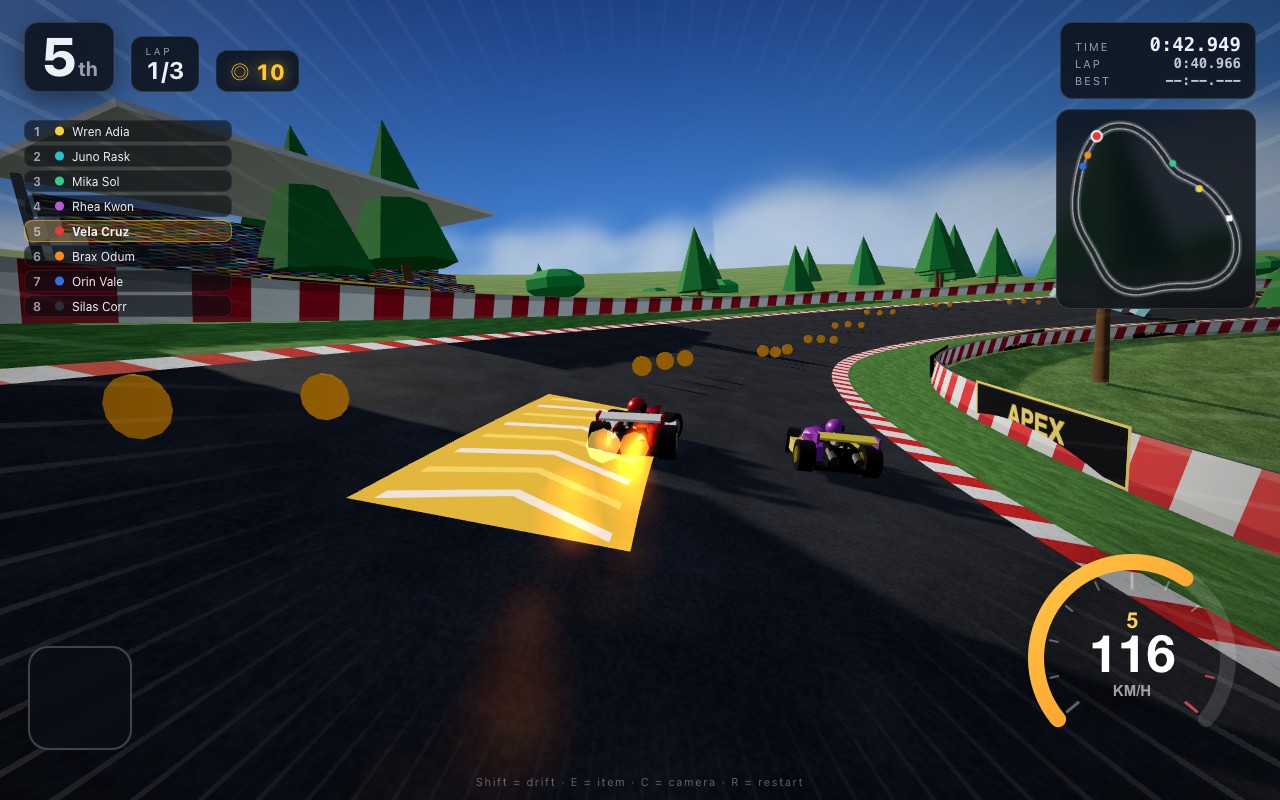
Grip-limited cornering capped at real lateral g, a Stanley path-tracking AI field, coins, jump ramps with tricks, item shields and a points championship.
After the six, I changed the test. Two newer models got a longer brief (the most realistic 3D kart racer they could make, playable on desktop and phone) and kept building over several rounds. So these two are not a like-for-like with the cards above. They show what a model does when you let it keep going.
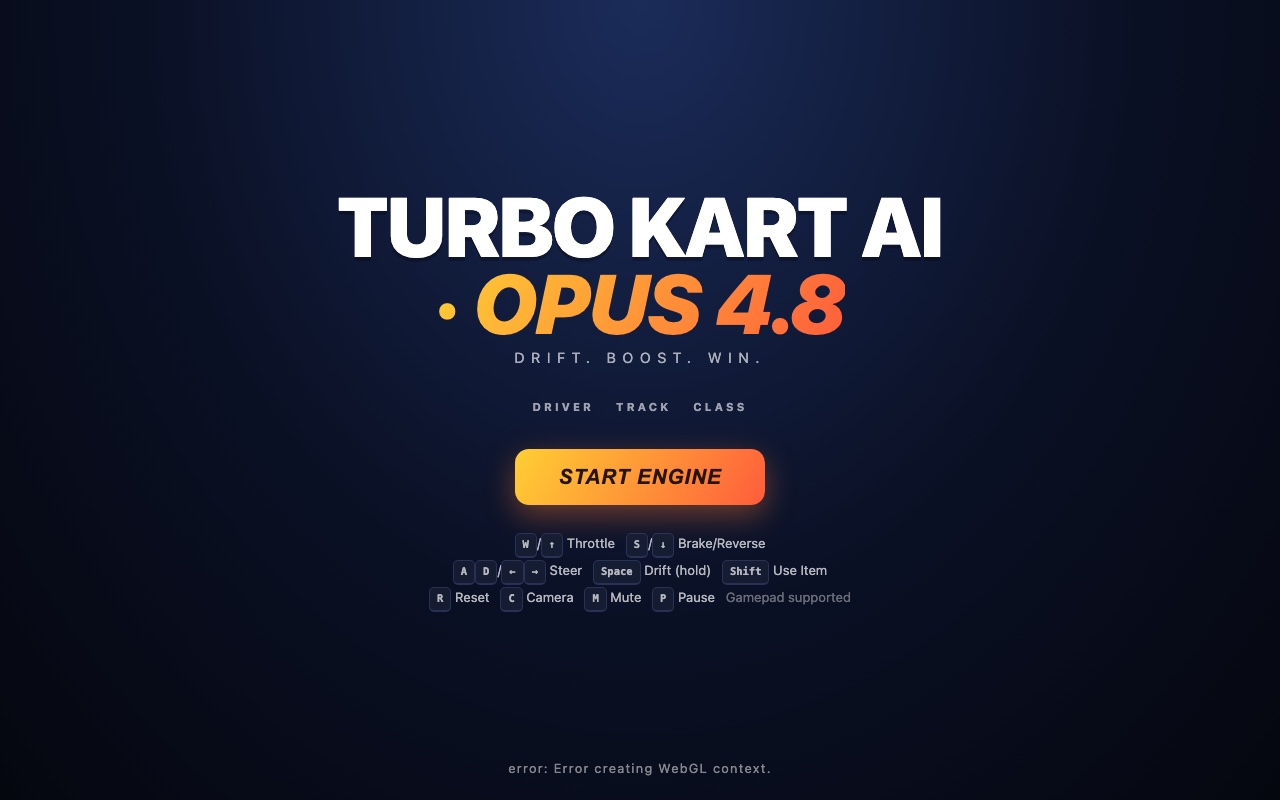
Four circuits that each feel like a different place: meadow, snowy mountain pass, beach and desert canyon. Rain and dusk modes, a three-race cup, a ghost to chase in time trial, and music written in code for each track.
Built over eight rounds starting 1 Sep 2026, from a longer brief than the other six.
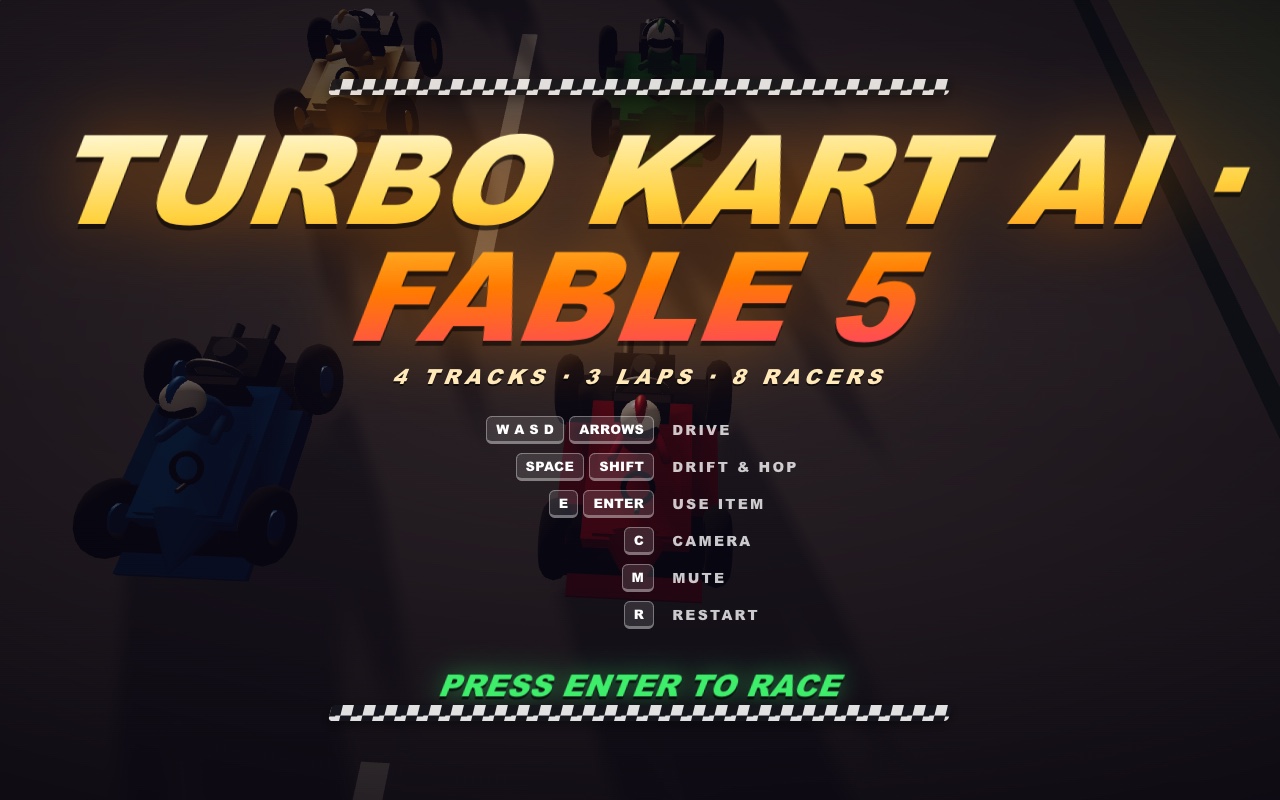
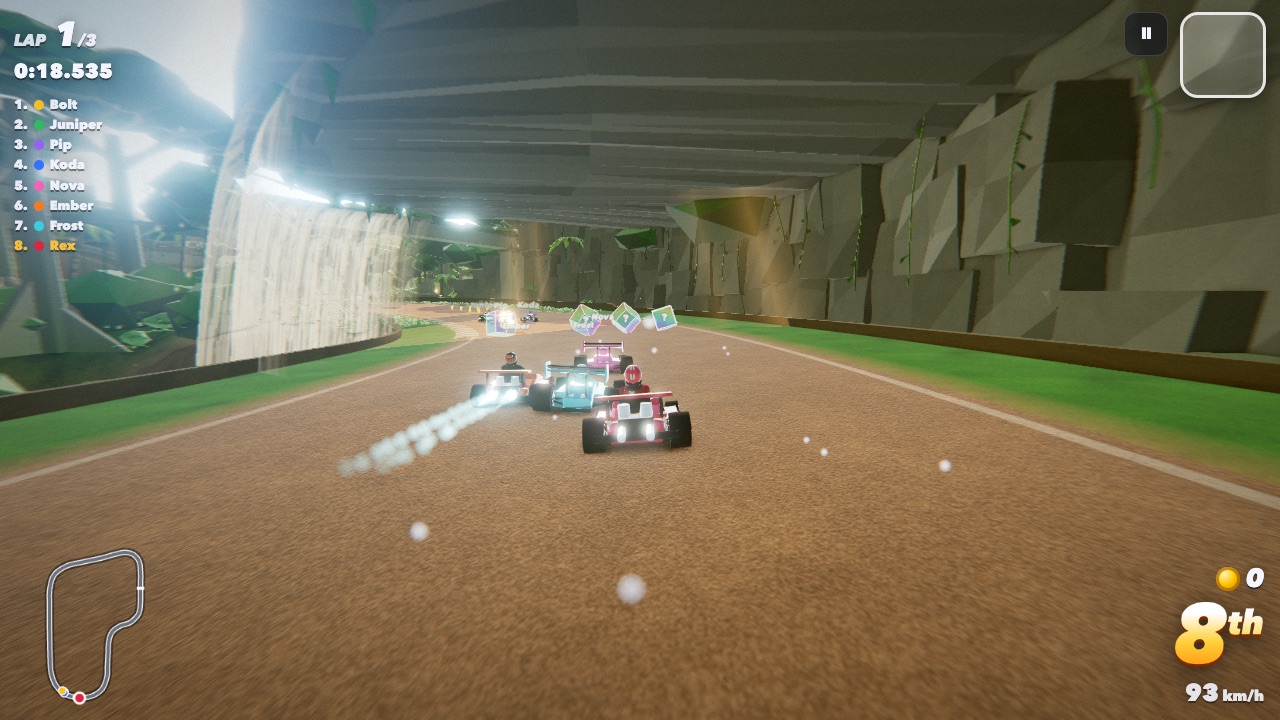
Nine circuits, from an alpine meadow and a coastal city to a lava field, a sky garden, a coral reef, a neon city and a jungle temple. World Tour has 5 worlds and 25 events with a rival to beat. There are Grand Prix cups, a world leaderboard for Time Trial laps, weather, mirror mode and a photo mode. Pick from 8 drivers and 4 vehicle types, and each one handles differently. It also ships as an iPhone app.
Started 22 Sep 2026 from a longer brief than the first six, then kept going through 25 Sep in recorded Claude Code sessions (83 more commits, all by Opus 5.5) as Turbo Kart Adventure.
Nobody needs an AI-built kart racer. The point is what it took to get one.
Fourteen months ago the best model available produced a flat oval and a start button from that prompt. The same prompt now produces a racing game with a physics model, an AI field that holds a racing line, and a championship structure. Nobody wrote a spec. Nobody fixed the output.
That curve is not confined to games. It is the same curve running under the reporting your team still assembles by hand, the proposals they rewrite from scratch each time, and the inbox someone triages every morning. The work that was out of reach for AI eighteen months ago is worth re-testing today, because the answer has usually changed.
The teams pulling ahead are not the ones with better tools. They are the ones who re-check what is now possible on a regular schedule.
This page is one weekend experiment. I run these constantly, on my business and on my life, and write up the ones that work: the prompt, the result, and whether it was worth the time. Short, practical, no hype.
// GET FREE UPDATES
One email. Instant access. We never share your address.
🔒 Secure · Powered by HubSpot
Click the game if the keys stop working. To leave, press All builds or your browser's Back button.